|
||||

| WILLIAM BILLINGS | ||
|
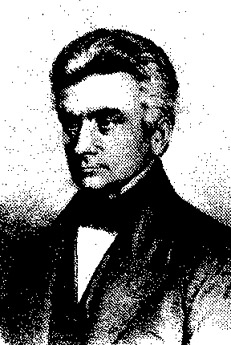
WILLIAM BILLINGS was born in Boston on October 7, 1746 and died there on September 26, 1800. He was composing in the United States during the years when Haydn and Mozart were most prominent in Europe. Often described as one-eyed and one-legged, addicted to snuff and unkempt, and employed as a tanner, teacher, and civil servant, Billings was America's first significant composer. The New England Psalm-Singer, a collection of 120 vocal works (with a frontispiece engraved by Paul Revere), was the first published edition of American music; The Singing Master's Assistant enjoyed immense circulation, in part, owing to its politically inflammatory lyrics. "Chester," Billings's famous and stirring Revolutionary hymn, might well be compared in function and effect to Martin Luther's Ein' feste Burg. Self-taught in composition, Billings drew on British models to develop a stark, primitive style of vocal composition appropriate to the stern New England church, yet occasionally idiosyncratic and experimental, such as the chorale titled Jargon. His harmonies are generally simple and open; the setting of texts (his own, and those of Isaac Watts and others) sometimes pictorial. |
|
|
Available from TENUTO PUBLICATIONS (Order from your favorite music retailer, or follow the link below to buy direct from Presser.) |
||
| 392-01099 |
WHEN JESUS WEPT for SAB Chorus & Organ (arr. Hamill) ... $1.25
| ||||